HONDA 61301-105-000NR Headlight Phantom
fits model: Xl100. make: Honda. year: 1975–1976.
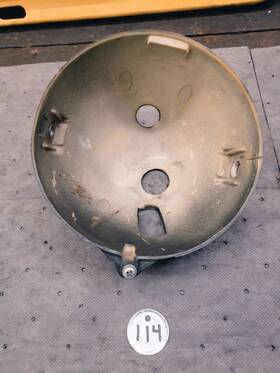
( Manufacturer Part Number: 61301-105-000NR ), ( Part Type: Headlight Case Bucket ), ( Country Of Origin: Japan )
Review HONDA Oem Xl 100 Headlight Case Bucket Phantom Black fits XL100 1975–1976
The **Honda 61301-1975-1976 XL100 Phantom Headlight Assembly (Part #61301-105-000NR)** is a meticulously crafted, high-performance lighting component designed exclusively for Honda s legendary XL100 Phantom model, produced during the 1975 and 1976 model years. This headlight assembly represents a blend of classic reliability and functional elegance, engineered to deliver crisp, long-lasting illumination while maintaining the iconic aesthetic of the Phantom s timeless design. Crafted from durable, high-quality materials, the assembly features a robust, sealed housing that protects the internal components from dust, moisture, and road debris, ensuring consistent performance even under demanding conditions. The headlight incorporates a dual-beam system, combining a bright, focused low beam for visibility in low-light conditions with a powerful high beam for extended range on open roads, making it ideal for both urban commuting and off-road adventures. The Phantom s signature round, retro-inspired lens design not only enhances the motorcycle s vintage charm but also optimizes light dispersion, reducing glare for the rider while maximizing visibility. This part is fully compatible with the original wiring and mounting brackets, ensuring a seamless fit with minimal modifications required. Whether restoring a classic XL100 Phantom or maintaining one in pristine condition, this headlight assembly is a premium, no-compromise choice for enthusiasts seeking both authenticity and performance. Its durable construction and precise engineering make it a standout component for riders who appreciate the perfect marriage of heritage and functionality.
### **Pros and Cons of Buying a 1975-1976 Honda XL100 XL Phantom Headlight (Part #61301-105-000NR)**
#### **Pros**
1. **Classic and Nostalgic Design** The XL100 XL Phantom is a rare and well-regarded model from Honda s early dual-sport era. Its vintage styling and reputation for reliability make it a desirable collectible for enthusiasts.
2. **Proven Reliability** Honda s early dual-sport engines (specifically the 99cc air-cooled single-cylinder) are known for durability if properly maintained. Many of these bikes still run strong after decades with basic upkeep.
3. **Lightweight and Maneuverable** The XL100 is small and nimble, making it ideal for urban riding, trail exploration, or commuting. Its low weight (around 180 200 lbs) makes it easy to handle.
4. **Simple Mechanics** The engine and drivetrain are straightforward, meaning repairs are often easier and less expensive than on modern bikes. Basic maintenance (oil changes, chain adjustments) can be done with minimal tools.
5. **Low Operating Costs** Fuel efficiency is excellent (around 100 mpg), and parts are still available from Honda or aftermarket suppliers. Insurance and registration costs are typically low compared to modern bikes.
6. **Off-Road Capability** While not as rugged as later dual-sports, the XL100 can handle light trails, gravel roads, and rough terrain better than most street bikes of its era.
7. **Customization Potential** The bike s simplicity allows for easy modifications, such as upgrading the exhaust, suspension, or adding aftermarket parts to improve performance or aesthetics.
8. **Community and Support** There is a dedicated community of XL100 owners and restorers who share knowledge, parts, and restoration tips. Forums and clubs (e.g., *Honda XL100 Owners Club*) provide resources for troubleshooting and maintenance.
---
#### **Cons**
1. **Age and Wear** A 1975 1976 model will likely have significant mileage (possibly 20,000 miles or more) and will require maintenance or restoration. Rust, worn components, and degraded plastics are common issues.
2. **Original Condition Uncertainty** Without a full service history, it s hard to know if the bike has been properly maintained. Common problems include:
- **Engine wear** (piston rings, valves, or crankshaft wear over time).
- **Transmission slippage** (synchros may wear out).
- **Suspension deterioration** (shock absorbers and springs can be shot).
- **Electrical issues** (old wiring, faulty switches, or a worn-out generator/alternator).
- **Frame rust** (especially in humid climates).
3. **Limited Modern Comfort** The riding position is upright but cramped, and the seat is hard. Modern ergonomics (wind protection, heated grips, etc.) are absent. The bike lacks features like disc brakes, ABS, or modern lighting.
4. **Parts Availability** While not extinct, some original parts (e.g., specific carburetors, seals, or wiring harnesses) may be hard to find. Aftermarket parts exist but may not always fit perfectly.
5. **Performance Limitations** The 99cc engine produces only about 6 7 horsepower, making it slow by modern standards. Acceleration and top speed ( 45 50 mph) are modest, which may be frustrating for some riders.
6. **Safety Concerns** The bike lacks modern safety features such as:- **Disc brakes** (drum brakes are less effective in wet conditions).
- **Trailing arm suspension** (early models may have stiff or worn shocks).
- **Modern lighting** (the phantom headlight is basic and may not meet current standards).
- **No turn signals or modern mirrors** (if equipped).
7. **Legal Restrictions** Some jurisdictions have strict regulations on vintage bikes, particularly regarding:- **Headlight and taillight compliance** (the phantom headlight may not meet modern brightness standards).
- **Exhaust emissions** (older bikes may fail smog checks in some areas).
- **Registration and insurance** (some insurers charge higher premiums for vintage bikes).
8. **Time and Effort Required** Restoring or maintaining the bike to a rideable condition can be labor-intensive. If you re not mechanically inclined, costs for professional work may add up quickly.
---
### **Conclusion**
Buying a **1975 1976 Honda XL100 XL Phantom headlight** is a project for someone who:- **Enjoys vintage motorcycles** and doesn t mind the trade-offs for nostalgia and simplicity.
- **Has mechanical skills or access to a mechanic** to address wear and tear.
- **Plans to restore or modify the bike** rather than ride it as-is.
- **Is okay with limited performance and comfort** in exchange for low cost and charm.
If you re looking for a **reliable, modern dual-sport bike**, this is not the right choice. However, if you want a **unique, low-cost, and customizable** project bike with Honda s legacy, it can be a rewarding purchase **as long as you re prepared for work**.
---
### **Recommendation**
1. **If you re a beginner or not mechanically inclined:**- Consider a **later-model Honda XL (e.g., XL600V or XL650V)**, which offers better reliability, modern features, and easier maintenance.
- Alternatively, buy a **restored or fully rebuilt XL100** from a trusted seller (check for service records).
2. **If you re experienced and want the project:**- **Buy from a reputable seller** who provides a **bill of health** (service records, proof of maintenance).
- **Budget for restoration** expect to spend **$1,000 $3,000 ** on parts and labor, depending on the bike s condition.
- **Prioritize key repairs first:**- Engine compression check (listen for knocking).
- Transmission smoothness (no grinding in gears).
- Frame integrity (no major rust or cracks).
- Tires, brakes, and suspension.
- **Consider upgrading safety features** (e.g., aftermarket disc brakes, modern lighting) if riding legally on public roads.
3. **If you just want to ride:**- Look for a **used but running XL100** (e.g., 1980s 1990s models) that requires less work but still offers the classic XL experience.
**Final Verdict:** The **1975 1976 XL100 XL Phantom headlight** is a **fantastic project bike for enthusiasts**, but it s not a "plug-and-play" purchase. If you re willing to put in the effort, it can be a **fun, unique, and rewarding** addition to your collection. If you want a **ready-to-ride** bike, seek a later model or a fully restored example.
Details:
part #: 61301105000nr price
- $30.00
specifications cyclelightasm:
- for models: Xl100
- for makes: Honda
- for years: 1975-1976
- mpn: 61301-105-000nr
- part type: Headlight Case Bucket
- country of origin: Japan
payments cyclelightasm:
- wallet: Google-pay
- credit card: Diners-club
- other
offer cyclelightasm:
- availability: In Stock
- quantity: 1
- started: March 24, 2026
- best offers: True
- sold: 0
- options: Ship-to-home
general cyclelightasm:
- condition: Used
- Motorcycle Scooter Parts Accessories > Lighting Lamps > Headlight Assemblies
returns cyclelightasm:
- policy: Returns Accepted
- paid by: Seller
- time: 30 Days
seller cyclelightasm:
- city: Spokane, Washington
- rating: 100.0%
- # reviews: 3132
shipping cyclelightasm:
- type: Calculated
- class: Standard
- service: USPS Ground Advantage
- transit: 3-7 Days
- cost: $0.00
- carrier: USPS
Honda 61301-105-000NR Is Similar To:
- Headlight 001-1012 Chrome Motorcycle Stanley Honda (23.9% similar) Lens sae m 71 Stanley japan back HM 23MSTANLEY 12V50 35W trim ring Stanley HM 18MJAPAN no cracks no wires this item is untested some rust in spots view pictures for more details sold as is...(July 13th, 2015)
- 001-5310 Stanley Honda Vfr Headlight Head Lamp Assembly Oem Original (34.2% similar) Looks to have no cracks and straight. Please review all pictures for overall condition and ask any questions prior to purchase. Review the pictures, read and make sure that this is right part for your vehicle. We buy classic cars. For sale is this honda Fr 750 f headlight head lamp assembly oem ...(November 2nd, 2018)
- 08v31-mea-10004 Honda New Nos Oem Shadow Aero Spirit Lightbar Fog Light (28.4% similar) 2011-UP VT750C shadow aery VT750C2 spirit VTX1300T, VTX1300R VTX1800...(June 9th, 2018)
- 1051284 Honda Front Headlight Head Light Lamp Cbr (37.6% similar) The lens and rest are in good shape with no damage. It was removed after the tabs on left side broke off as shown. This is a used headlight assembly from an 2015 honda BR 300R. Otherwise it is in good shape...(April 26th, 2018)
- Honda Front 110-40206 Factory 01-06 Cbr600 Oem Cbr600f4i Headlight F4i Light (42.5% similar) Please serious buyers only. I will combine shipping on multiple items purchase where applicable. Thanks and happy buying. It is in good working condition as listed and shown. Buyer to pay high bid amount plus...(January 19th, 2015)
- 110081 Fair Lens Assembly Honda 1979 Used Case Headlight Housing Cm400t (33.5% similar) Oem headlight head light bucket housing bowl case front plastic cover assembly bulb lens unit CM400T CM400 cm 400 outsmart. Only the part shown in the pictures are included. Parts have sticker and or tape which will need to be removed. Listed items are primarily for vehicles originally sold in the ...(May 27th, 2015)
- 1100xx cbr angel demon 1000rr eye honda led 250r projector headlight (25% similar) 75 overall DIAMETER,4...(August 13th, 2015)
- 111hlu Beatrice Cycle Inc Honda Odyssey Headlight Bucket Assembly (37.6% similar) ...(February 3rd, 2019)
- 1972 72 750k 118933 Honda Cb750 Cb Headlight (31.3% similar) This is from a 1972 honda CB750 CB750K. Shows wear from normal use unless stated otherwise. Items may be disassembled for shipping purposes. Stock 118933. Thanks it is being sold as is with no warranty. Will not release part until it is paid in full...(December 4th, 2014)
- 120-303-673 Honda Headlight 6v 130 (28.8% similar) ...(July 27th, 2017)
- 121231 Baja Designs All Years Fits Honda Xr Headlight 782731560809 (24% similar) Damaged delivery. Please through for rate quotes. This conversion kits come equipped with a halogen headlight containing an h4 high low bulb along bike specific wiring harness no cutting, crimping or soldering required for easy installation. Standard turn signals may be substituted with led mini-...(January 17th, 2019)