HARLEY-DAVIDSON 2401-36 Clutch Basket El Engine Transmission
fits model: Knucklehead. make: Harley. year: 1936–1938.
( Brand: Harley-davidson ), ( Manufacturer Part Number: 2401-36 ), ( Non-domestic Product: No ), ( Type: Headlight Assembly ), ( Country Of Origin: United States )
Review HARLEY DAVIDSON Clutch Basket El Engine Transmission fits KNUCKLEHEAD 1936–1938
The **Harley-Davidson 2401-36 Knucklehead Clutch Basket (1936 1938)** is a meticulously crafted, vintage component that embodies the iconic engineering and craftsmanship of Harley-Davidson s early Knucklehead engine era. This clutch basket, designated as part number **2401-36**, was specifically designed to interface with the **1936 1938 74-cubic-inch V-Twin engine (EL engine)**, serving as the critical link between the transmission and the flywheel, enabling smooth power transfer while accommodating the unique characteristics of the Knucklehead s overhead-valve design. Constructed from high-grade cast iron, the basket features a robust, ribbed structure that reinforces its durability, ensuring it can withstand the torque and vibrations inherent in Harley s legendary powerplants. The inner diameter is precisely machined to accommodate the **1936 1938 transmission s input shaft**, while the outer surface is designed to securely mount the **clutch pressure plate assembly**, allowing for optimal engagement and disengagement of the friction plates. This clutch basket is a key element in the **three-speed transmission** found in the **1936 1938 Harley-Davidson models**, including the **FL, FLH, and FX**, where it plays a vital role in delivering the signature Knucklehead s raw, unfiltered power to the rear wheel. Whether restoring a classic Knucklehead motorcycle or maintaining one in peak operating condition, this clutch basket is an essential, period-correct part that ensures proper function and authenticity. Its historical significance, combined with its functional reliability, makes it a prized component for enthusiasts and mechanics alike who seek to preserve the mechanical integrity of Harley-Davidson s most iconic early V-Twin engines.
### **Pros and Cons of Buying a 1936 1938 Harley-Davidson 2401-36 "Knucklehead" Clutch Basket, El Engine, and Transmission**
#### **Pros**
1. **Historical Significance and Rarity**
The 1936 1938 Harley-Davidson 2401-36 "Knucklehead" is one of the most iconic and sought-after vintage motorcycles ever produced. Its distinctive knuckle-shaped valve covers, overhead valve design, and classic styling make it a prized possession among collectors and enthusiasts. Owning one places you in a small but passionate community of vintage motorcycle lovers.
2. **Engine and Performance**
The EL engine (a 74-cubic-inch flathead evolved into an overhead valve design) is a legendary powerplant. The Knucklehead s pushrod OHV setup was groundbreaking for its time, offering smoother operation and better performance than earlier flathead models. With proper maintenance, these engines can still deliver reliable power, especially when restored or modified.
3. **Classic Design and Aesthetics**
The Knucklehead s design is timeless, with its rounded fenders, classic fuel tank, and distinctive valve covers. Many riders appreciate the raw, unpolished charm of these early Harley-Davidsons, which stand out in contrast to modern bikes. The bike s presence at vintage meets or rallies is often a conversation starter.
4. **Potential for Restoration and Customization**
The Knucklehead platform is highly customizable. Owners can restore the bike to original condition, modify it for modern comfort (e.g., updated suspension, brakes, or ergonomics), or even swap in modern components while preserving its classic look. The aftermarket for parts and accessories is robust, though some components may require custom fabrication.
5. **Investment Potential**
Well-preserved Knuckleheads have appreciated in value over the years, especially those with original or restored components. While they are not as liquid an investment as stocks or real estate, a properly maintained example can be a sound long-term asset for collectors.
6. **Community and Enthusiast Appeal**
Owning a Knucklehead grants access to a tight-knit community of vintage Harley enthusiasts. There are clubs, rallies, and online forums dedicated to these bikes, offering support, restoration advice, and camaraderie. This sense of belonging can be highly rewarding for dedicated riders.
---
#### **Cons**
1. **High Maintenance and Repair Costs**
Vintage motorcycles, especially those from the late 1930s, require significantly more maintenance than modern bikes. The Knucklehead s mechanical complexity including the pushrod OHV engine, manual transmission, and drum brakes means that routine upkeep (oil changes, valve adjustments, chain tensioning) is labor-intensive. Parts can be expensive or difficult to source, particularly for original components.
2. **Reliability Issues**
While the EL engine is robust, it is not immune to wear. Common problems include worn camshafts, valve train issues, and cylinder head leaks. The transmission and clutch may also require frequent attention, especially if the bike has not been well-maintained. Rust, especially in the frame and suspension components, can be a persistent issue depending on the bike s storage history.
3. **Limited Modern Comfort and Safety Features**
The Knucklehead was designed in an era when rider comfort and safety were secondary to raw performance. Modern ergonomics (e.g., adjustable seats, handlebars, or footpegs) are often absent or require aftermarket modifications. Braking is primarily mechanical, with drum brakes that are less effective than modern disc systems. This can be a safety concern, particularly for inexperienced riders or those used to contemporary bikes.
4. **Fuel and Emissions Challenges**
The Knucklehead runs on leaded gasoline, which is no longer widely available. While some gas stations still carry it, it may require special ordering or driving to a specific location. Additionally, the bike does not meet modern emissions standards, so it cannot be legally ridden in many urban areas or on highways with strict regulations.
5. **Cost of Restoration or Preservation**
Restoring a Knucklehead to running condition can be prohibitively expensive. Original parts are scarce, and many components must be rebuilt or replaced. Even a "restored" example may require ongoing maintenance to keep it reliable. For those who prefer to preserve the bike as a static display, storage and conservation costs (e.g., climate control, rust prevention) add up over time.
6. **Limited Practicality for Daily Use**
The Knucklehead is not built for daily commuting or long-distance riding. Its lack of modern amenities (e.g., wind protection, heated grips, or advanced suspension) makes it uncomfortable for extended use. The bike s weight (around 500 600 lbs when fully restored) and limited fuel range (approximately 30 40 miles per tank) further reduce its practicality for everyday use.
7. **Insurance and Legal Restrictions**
Insuring a vintage Harley can be costly due to its value and the risks associated with restoration projects. Some insurance providers may classify it as a "collector s item," leading to higher premiums. Additionally, many states have restrictions on vintage bikes, particularly regarding emissions or safety equipment, which may require modifications to legally ride the bike on public roads.
---
### **Conclusion**
Buying a 1936 1938 Harley-Davidson 2401-36 Knucklehead is a decision that should be made with careful consideration of your goals, budget, and commitment level. If you are a passionate collector, a restorer, or an enthusiast who values the bike s historical significance and aesthetic appeal above practicality, this motorcycle can be an incredibly rewarding investment. The Knucklehead offers a unique connection to Harley-Davidson s golden era and the chance to be part of a niche community.
However, if you prioritize reliability, modern comfort, or practicality for daily use, the Knucklehead may not be the best choice. The high maintenance costs, potential reliability issues, and lack of contemporary features can make ownership challenging. It is also important to note that restoring or maintaining a Knucklehead is a long-term commitment that requires mechanical skill, patience, and financial resources.
---
### **Recommendation**
**Buy the Knucklehead if:**- You are a dedicated vintage motorcycle enthusiast with the skills, time, and budget to maintain or restore it.
- You value the bike s historical significance and aesthetic appeal more than practicality.
- You plan to use it primarily for leisure rides, shows, or rallies rather than daily commuting.
- You are prepared for the potential costs of parts, restoration, and insurance.
**Avoid buying the Knucklehead if:**- You expect a reliable, low-maintenance motorcycle for regular use.
- You lack mechanical experience or the ability to perform necessary repairs.
- You are not willing to invest significant time and money into its upkeep or restoration.
- You prefer modern amenities such as disc brakes, ergonomic seating, or fuel efficiency.
For those who want a vintage Harley experience but with more modern practicality, consider a later model (e.g., 1940s 1950s Panhead or 1960s 1970s Knucklehead/Flattop) or a restored example with updated components. Alternatively, if you are unsure about the commitment, rent or borrow a Knucklehead for a few rides before purchasing to gauge your interest.
Details:
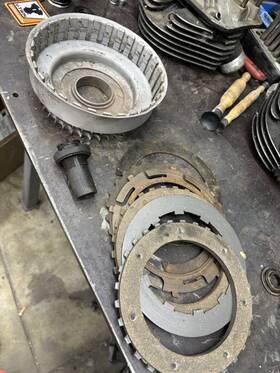
Parts are in used condition see pictures for details or feel free to message me. Early Knucklehead Flathead Harley clutch basket parts. Clutch basket, nut, clutch pads and disks included other parts in the background not.
part #: 240136 prices
- $29.00-$100.00
specifications cyclelightasm:
- for models: Knucklehead
- for makes: Harley
- for years: 1936-1938
- brand: Harley-davidson
- mpn: 2401-36
- non-domestic product: No
- type: Headlight Assembly
- country of origin: United States
payments cyclelightasm:
- wallet: Apple-pay
- other
- credit card: Visa
shipping cyclelightasm:
- carrier: USPS
- class: Standard
- type: Calculated
- cost: $10.60
- transit: 3-7 Days
- service: USPS Ground Advantage
general cyclelightasm:
- condition: For parts or not working
- Motorcycle Scooter Parts Accessories > Lighting Lamps > Headlight Assemblies
offer cyclelightasm:
- started: June 3, 2026
- availability: In Stock
- sold: 0
- quantity: 1
- options: Ship-to-home
returns cyclelightasm:
- policy: No Returns
seller cyclelightasm:
- # reviews: 489
- rating: 100.0%
- city: Redlands, California
Harley-davidson 2401-36 Is Similar To:
- 0000-0001 Harley-davidson Harley Davidson Dual (36.9% similar) Harley davidson road glide headlamp take offing stock now. No extras ask questions. All parts in the pictures are included. Please message me. I do not guarantee fitment. Message me only through. Only what you see in the picture is included. These are take-off parts and have normal wear tear. FYI ...(October 15th, 2017)
- Harley Davidson Chopper Eyebrow Headlight 001-2106 Visor Stanley Vintage (34.6% similar) Harley davidson headlight w visor eyebrow chopper vintage Stanley 001 2106UP for your consideration is a harley davidson headlight with visor. Please look over the photos and ask questions before buying. The glass is labeled Stanley japan. This piece is in great condition with no rust or pitting and...(November 23rd, 2014)
- 0137482 Harley Davidson Sportster Front Chrome Headlight Bulb (33.1% similar) May fit other model's. Has a dent, see pictures. Please verify. 2009 Harley-davidson sportswear XL1200 front chrome headlight w bulb B2...(March 21st, 2019)
- 0139681 Harley-davidson 2005 Fatboy Flstfse Single (40.3% similar) This item came off my own 05 CV and retails for HD part bulb included. This item fits multiple bikes and years. 7 halogen headlamp clear smooth lens with reflectors...(February 21st, 2017)
- 0207-2005xvt-ch Xtreme Machine Headlight Bezels Chrome Harley Davidson (16.9% similar) Extreme machine 7 headlight bezels chrome 2005 XVT-CH harley davidson more than not, extraordinary beauty hits you right smack in the face and leaves your knees weak...(June 10th, 2018)
- 051 Topnew Harley-davidson Halo Angel 611745075545 (34.3% similar) If you accept delivery and then find shipping damage, please save all packaging material paperwork immediately. Please list your special requests color, packages, etc. Feel free to with any questions. Return and exchange can only be issued on defective item or wrong shipped. Total amount due ...(December 23rd, 2017)
- 0602447450877 Harley Davidson Inch Cree Led Headlight Daymaker Mounting 602447450877 (29.8% similar) ...(October 15th, 2018)
- 0602447450884 Inch Led Projector Headlight Daymaker For Harley Davidson 602447450884 (21.4% similar) Super bright light pattern over standard incandescent lamps,cut through the night. High low beam for motorcycle headlight assembly option. Direct fit harley 3 prong plugs on headlight. 4000LMS 40W on low beam 8000LMS 80W high. Foxiest,foxiest,and fixated model's. High low beam for motorcycle ...(October 15th, 2018)
- 07880-74 Harley Davidson Sportster Xlh Head Light Lamp Headlight Cover (35.1% similar) ...(March 25th, 2019)
- Black Refit Bullet Headlamp Headlight For Harley Davidson Chopper Motorcycle 0791321604311 (21.8% similar) voltage 12V4. Casing diameter at widest compatibility choppers and HARLEYS2. Casing colour BLACK3. Fits harley motor and some Honda, Yamaha, Kawasaki, Suzuki model's...(October 28th, 2015)
- 0997-004-4-tpa-bm Fits Harley Davidson Touring Billet Headlight Trim Ring Like High (32.3% similar) No cracks or damage. This is a billet trim ring for the harley davidson touring model's with 7 headlight. I am not sure of the maker, but they did a great job with this. This is in very good condition and ready to install once you your spring clips from stock trim ring. From 5 feet away, it is hard ...(April 9th, 2018)